Human-to-Human Marketing: What is it and Why is it Important?


There’s a lot of technology in marketing right now. AI writes the copy, automation runs the journeys, and algorithms pick the send times. And somewhere in all of that, it’s easy to forget the one thing every campaign has in common: there’s a person on the other end.
That’s the idea behind human-to-human (H2H) marketing. Your audience is human first and customer second, whether you sell to businesses (B2B) or straight to consumers (B2C). A company has never bought anything; the people inside it do.
In this guide, we’ll cover what H2H marketing means, how it fits alongside B2B and B2C, why it matters more in the age of AI, and how to put it into practice.
What Is Human-to-Human Marketing?
Human-to-human(H2H) marketing is an approach that treats every marketing interaction as a conversation between two people, rather than a transaction between a business and a target segment. Instead of asking “how do we message this audience,” it asks “how would we talk to this person?”
In practice, that means marketing built on empathy, plain language, honesty, and genuine two-way communication. You’re still meeting a customer’s needs, but you’re doing it in a way that shows there are real people behind your brand, and that those people can be trusted. It’s the model that responsible marketing is built on, which is relationships with customers and prospects based on long-term trust and respect.
H2H vs B2B vs B2C: What’s the Difference?
Whether you’re B2B or B2C, a person makes the final call. The marketing manager choosing a platform and the shopper choosing trainers are doing the same thing: weighing up options, working out who to trust, and deciding who to buy from. So, B2B and B2C are your industries; H2H is your approach.
| B2B | B2C | H2H | |
| Describes | Your audience | Your audience | Your approach |
| Talks to | Companies and buying teams | Consumers | The person reading |
| Sounds like | Professional, formal | Promotional, mass-market | A conversation |
| Wins by | Logic and ROI | Price and convenience | Trust and connection |
Why Is Human-to-Human Marketing Important?
Our Customer trend index found that only 15% of consumers say marketing messages feel very relevant to them, down from 23% last year. When so few messages connect, every campaign has to work harder for a smaller share of attention.
The same research points to what people respond to instead. Friends and family are 45% more likely to influence a customer’s loyalty to a brand than they were a year ago, which tells us that when a recommendation comes from a real person, people trust it enough to act on it.
Your marketing can’t replace a friend’s recommendation, but you can move it closer to one by writing like a person, showing the people behind your brand, and talking to customers the way you’d want to be talked to. The more your marketing feels like a conversation with a real human, the more trust it builds along the way.
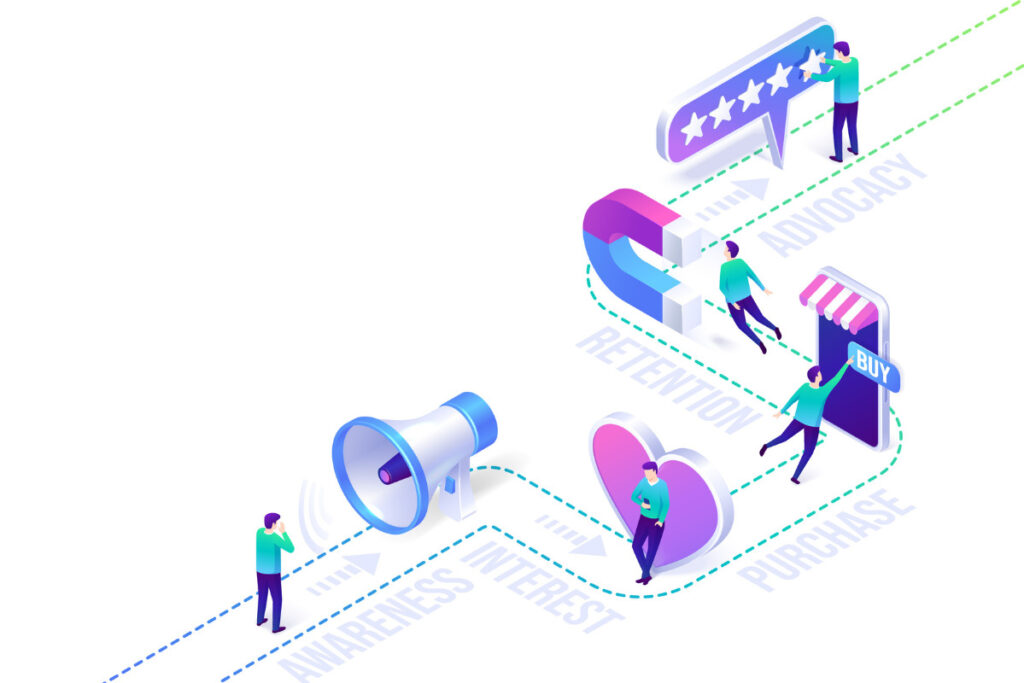
When you get this right consistently, three things happen:
- People trust you more. Trust builds one interaction at a time, and every message that feels honest and personal adds another layer of it
- People forgive you more. Everyone slips up from time to time, whether it’s a broken link, a mistimed send, or a pricing error. When your brand has a human voice, a genuine apology lands better, and people move on rather than heading for the unsubscribe button
- People buy from you more. Feeling understood is persuasive, and a message that speaks to someone’s situation will always outsell one aimed at a broad segment
Best of all, this costs you nothing extra. Your team is already full of humans who know how to talk to people, so human-to-human marketing is less about new investment and more about letting their personality show up in the work.
Standing Out When Everything Sounds Like AI
We first published this article in 2021, a year before AI platforms like ChatGPT existed. Back then, AI worked behind the scenes of your marketing, like deciding when to send your email or which products to recommend, but a human still wrote every word your customers read. Nobody was worried about their emails sounding like a machine wrote them, because machines weren’t writing them.
These days, it can help write your emails, design your creative, and build entire campaigns. And with AI now built into most marketing platforms, almost every brand is using it to some degree.
The thing is, though, your customers have noticed. They’re wading through AI-written emails, AI-generated ads, and chatbots every day, and they’ve developed a sharp instinct for spotting them. People are getting tired of it, and when something feels automated, they scroll past without a second thought.
Which is exactly what makes the human stuff land better. A specific point of view or a bit of wit is what makes someone stop and think there’s a real person behind this brand.
None of this is an argument against using AI. The point is to use AI the right way. Let it handle the work that eats your team’s time, like building segments, picking send times, running tests, and pulling reports, so the humans get those hours back for the work machines can’t do, which is:
- Talking to customers
- Writing with personality
- Noticing what your audience cares about right now
How to Build a Human-to-Human Marketing Strategy
1. Get Your Tone of Voice Right
Your brand voice is one of the first things customers notice about your brand. To build stronger connections with your audience:
- Be real: authenticity is about saying what the reader needs to hear, not what they want to hear
- Be empathic: let your audience know that you understand them, that you’ve been in their shoes
- Be personal: get to know your customer, know their names, likes and dislikes. It all goes a long way
Here’s an Example:
Take the welcome email. Most are just a logo, a generic hello, and a discount code. Now imagine one that reads like a personal note: here’s what we’re about, here’s what you can expect from us, and if you fancy replying, a real human will read it. Nobody replies to a noreply@ address, but people will happily reply to a person, and those replies tell you more about your audience than any survey.
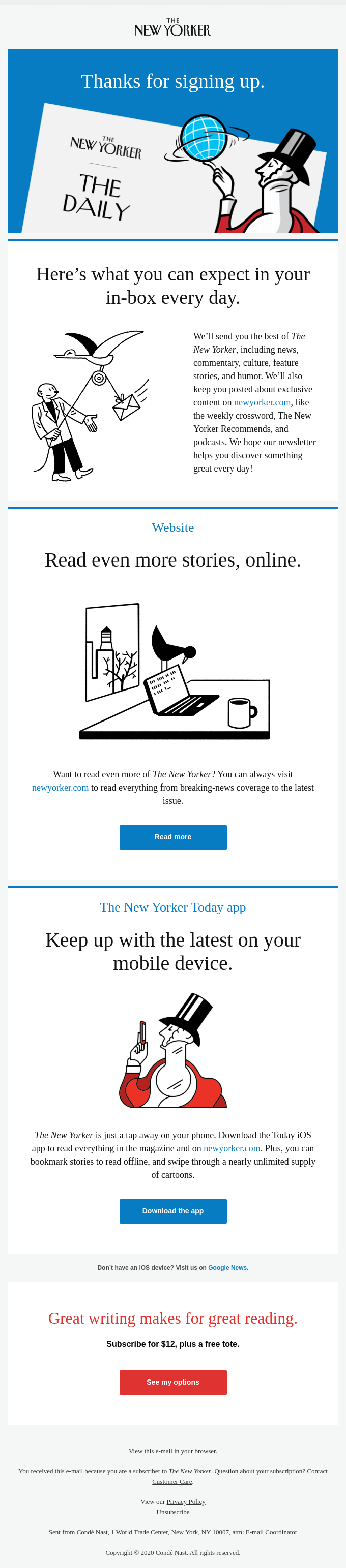 Welcome email from the New Yorker
A Helpful Tip:
Before anything goes out, read it aloud, and if you wouldn’t say it to a customer, rewrite it until you would.
2. Ditch the Jargon
Stuffiness, formality, and jargon put a wall up between you and your audience. Every acronym you don’t explain and every sentence that needs a second read is a small signal that you’re talking at people rather than to them.
Write the way you’d explain something to a colleague or friend, using plain words, short sentences, and skip the fancy words. Talking to your audience as equals is one of the fastest ways to build connection, and it costs nothing.
3. Tell People What’s Going On
Trust is built on openness, so tell your audience about the decisions that affect them. Explain why you’re collecting their data and what you plan to do with it.
Here’s Another Example
KitKat showed how this works when thieves stole 12 tonnes of its chocolate in transit. The brand’s first move was a straightforward statement addressing what customers would want to know, which was that there were no concerns for consumer safety, and supply wasn’t affected.
With the serious part handled, the brand had some fun with it, joking that someone had clearly taken the “have a break” slogan too literally, and eventually created a tracker that let people check whether their own bar came from the stolen batch. The post became the most-liked in the brand’s history, over 100 other brands joined in, and what should have been a supply chain headache turned into a Cannes-winning moment.
Now, you’ll probably never have 12 tonnes of chocolate go missing, but the same thinking applies to a broken link or a mistaken send: tell people about it openly, add a bit of personality (where it’s appropriate), and you’ll build far more trust than hoping nobody notices.
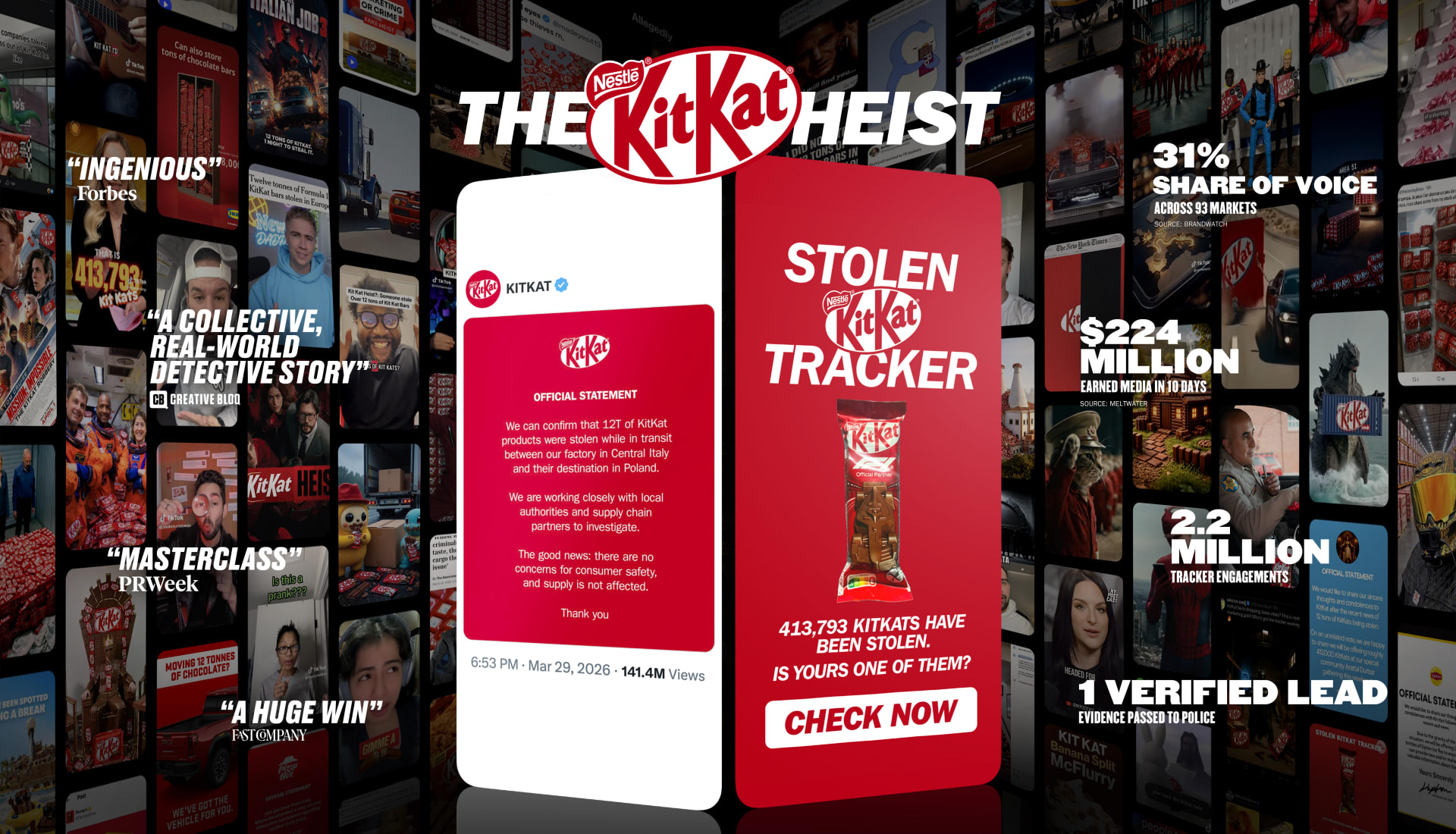 The KitKat Heist | VML
4. Make Your Automation Feel Personal
Use the data you hold to make experiences genuinely better, like:
- A well-timed reminder about something they left behind
- A recommendation that reflects what they’ve browsed
- A birthday message that arrives on the right day
A Helpful Tip:
The test for every automated touchpoint is whether it makes the customer’s experience smoother or more relevant. Let your customer journey data show you where you can add real value.
5. Make It Easy to Reach a Human
In a two-way conversation, customers have a direct connection to the people behind your brand. Live chat, social media, and messaging apps all give people a direct line to your team, and how those conversations feel matters as much as how fast they happen. Let your support team write like themselves, sign off with their names, and drop the script when the script isn’t helping.
A Helpful Tip:
If you’re using AI or bots, be upfront about it, and always give customers a quick way to reach a real person.
6. Join the Conversation on Social
Social media was built for conversations between people, which makes it a natural home for human-to-human marketing. Answer questions, reply to comments, share what your customers create, and post content that is both light-hearted and useful. Going live, showing your team, and joining conversations rather than broadcasting into them all remind people there are humans behind the logo. The brands that get this right are easy to spot because their replies could only have come from them.
One More Example:
Duolingo turned its owl into one of the most-followed personalities on TikTok by being genuinely funny rather than brand-funny. You don’t need a mascot or a viral moment, though. You just need your replies to sound like someone on your team wrote them, because they did.

Marketing Made Human
Behind every open, click, and purchase is a person who can tell when a brand is talking to them and when it’s talking at them.
Human-to-human marketing is the decision to act on that. Write like you’d talk, be honest about how you work, let AI take the repetitive jobs, and give your team the room to bring some personality to the rest. None of it needs a bigger budget or a new strategy deck, because the humans who can do this are already there.
And with so much marketing now generated at the push of a button, sounding like a real person is your brand’s biggest advantage.
Want more like this?
Want more like this?
Insight delivered to your inbox
Keep up to date with our free email. Hand picked whitepapers and posts from our blog, as well as exclusive videos and webinar invitations keep our Users one step ahead.
By clicking 'SIGN UP', you agree to our Terms of Use and Privacy Policy


By clicking 'SIGN UP', you agree to our Terms of Use and Privacy Policy
Other content you may be interested in




Want more like this?
Want more like this?
Insight delivered to your inbox
Keep up to date with our free email. Hand picked whitepapers and posts from our blog, as well as exclusive videos and webinar invitations keep our Users one step ahead.
By clicking 'SIGN UP', you agree to our Terms of Use and Privacy Policy
Brought to you by