


The B2B Decision-Maker Is Human: Key Takeaways From a Fireside Chat with Deliveroo's Amie Farrell

TL;DR: B2B decision-makers are emotional buyers, not purely rational ones. Deliveroo for Work's own research shows word of mouth rivals digital media in influence, and price rarely wins the deal.
Trust needs to be built before things go wrong, through real human contact rather than automation.
Content strategy should track broader social trends (native content, creators, building in public) rather than assuming B2B needs its own rulebook. And the next challenge is messaging the whole buying group, not just a single decision-maker persona.
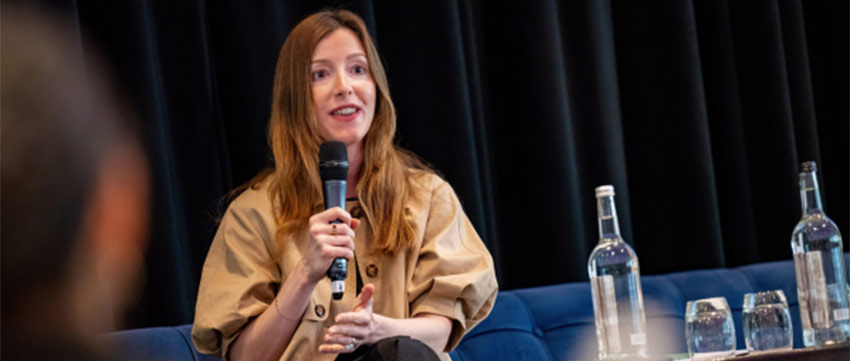
At B2B Marketing Live Manchester, Olivia Mae Hanlon, founder of Girls in Marketing, sat down with Amie Farrell, Global Head of Marketing at Deliveroo for Work, to unpack one of the industry's most persistent myths: that B2B marketing (and the B2B decision-maker) is boring.
Drawing on two and a half years of building Deliveroo's B2B proposition from a blank page, Amie shared the research, campaigns and content strategy behind a brand determined to prove otherwise. Here are four takeaways from the conversation.
1. B2B Decision-Makers Buy With Emotion, Not Just Logic
The idea that B2B purchasing is purely functional doesn't hold up.
Deliveroo for Work's own research backs this up: when asked what most influenced their choice of workplace benefits provider, 70% of decision-makers cited digital media, but a near-identical 68% pointed to word of mouth and conversations with colleagues. Price wasn't even the top factor in choosing a food-at-work provider; what employees liked was.
Amie traced this back to a Nestlé exercise called the "Five Ws", repeatedly asking "why" behind a purchase decision until you reach the real, often emotional, motivation. Her example: a procurement manager choosing the right supplier isn't just ticking a box, he's trying to impress his boss, earn a promotion, and ultimately take his kids to Disneyland. "There is human emotion at the heart of everything we do," she said. A challenge to any marketer who assumes their category is too dry for it.
2. Trust Has To Be Earned Before The Crisis Happens
For a service where a late delivery to a trade show or office lunch is a real, visible failure, trust can't be built after something goes wrong, it has to be established in advance. Amie's team leans heavily on human contact: account managers talking clients through exactly how a new service works, and a real phone number when things go wrong. "People don't want to speak to an AI bot when they're in trouble,".
As Deliveroo for Work scales its new catering proposition, the team is still testing which trust signals resonate most, from restaurant quality to live order tracking.
3. Content Strategy Should Follow The Audience, Not The Category
Rather than treating B2B and B2C content as different disciplines, Amie's approach is to track what's working across social media generally and adapt it.
That's meant a heavy investment in LinkedIn, native-feeling content, and partnerships with creators.
It's also meant looking beyond marketing for inspiration, from Sult and Graza's "build in public" approach to Sephora's data-led CRM personalisation and Farmer J's consistent, pun-driven branding ("forking delicious"). The common thread: audiences respond to people and personality, whether the deal being closed is worth £50 or £5 million.
4. The Next Frontier Is Messaging The Whole Buying Group, Not Just The Account
B2B purchases are rarely made by one person, and Amie was candid that this is still a work in progress for her team.
Deliveroo for Work currently segments its LinkedIn messaging by company size, industry and geography, but not yet by individual role within the buying group, whether that's a procurement director or an office manager, each with different priorities. Getting message pillars and CRM segmentation to reflect that complexity, rather than treating the "decision-maker" as a single persona, is the next stage of the strategy.
Watch the full session:
Want more like this?
Want more like this?
Insight delivered to your inbox
Keep up to date with our free email. Hand picked whitepapers and posts from our blog, as well as exclusive videos and webinar invitations keep our Users one step ahead.
By clicking 'SIGN UP', you agree to our Terms of Use and Privacy Policy


By clicking 'SIGN UP', you agree to our Terms of Use and Privacy Policy
Other content you may be interested in

Categories



Categories
Want more like this?
Want more like this?
Insight delivered to your inbox
Keep up to date with our free email. Hand picked whitepapers and posts from our blog, as well as exclusive videos and webinar invitations keep our Users one step ahead.
By clicking 'SIGN UP', you agree to our Terms of Use and Privacy Policy
Brought to you by
